
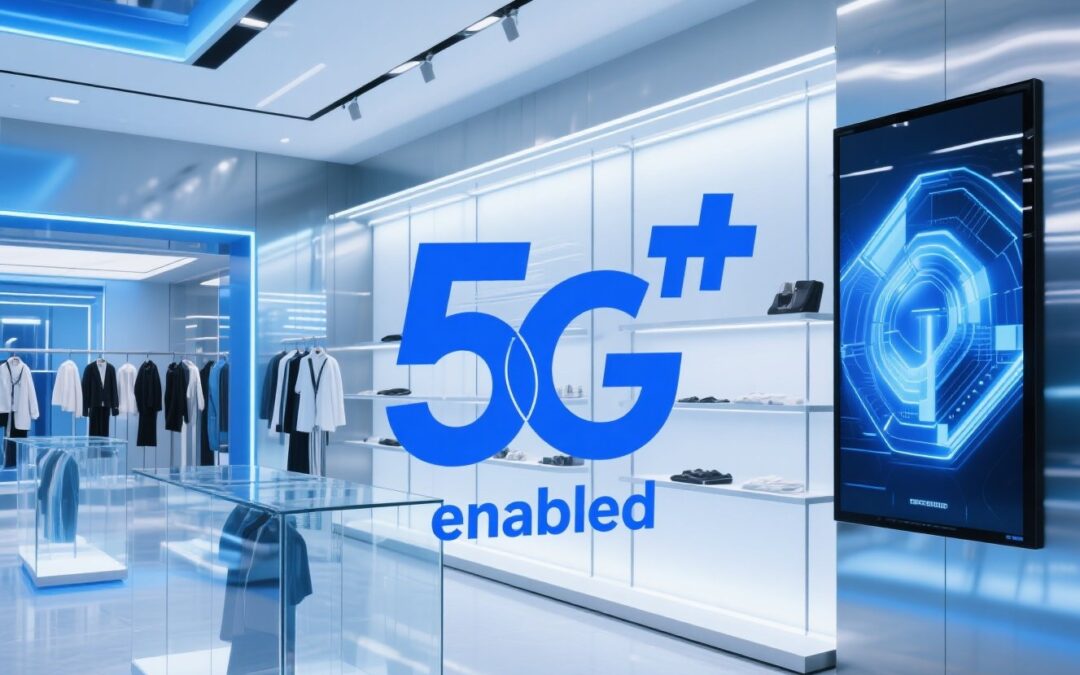
The Next Retail Revolution Is Here
According to Wise Guy Reports, The 5G Smart Retail market—valued at USD 4.89 billion in 2024—is forecast to reach USD 35 billion by 2035, growing at nearly 19.6% CAGR.
Beyond the numbers lies a simple truth: the next era of retail will be powered not only by better products or experiences, but by instant data, low-latency connectivity, and real-time insight. These are the hallmarks of the 5G revolution—an evolution that will redefine how stores operate, how customers engage, and how brands grow.
For retailers across Southeast Asia, the implications are enormous. As the region races toward digital maturity, 5G is emerging as the invisible infrastructure enabling smarter stores, deeper personalization, and more agile decision-making.
Southeast Asia’s 5G Retail Context
The retail landscape in Southeast Asia has always been dynamic—shaped by rapid urbanization, young digital-native consumers, and the fusion of physical and digital commerce. The introduction of 5G is accelerating this transformation, giving retailers a powerful new lever to achieve true operational agility.
In Singapore, near-universal 5G coverage is powering pilots for connected shopping malls and airport retail concepts. Thailand has positioned 5G as a pillar of its Thailand 4.0 digital strategy, driving experiments with smart stores in Bangkok’s high-traffic districts. Indonesia, with its vast geography and growing middle class, is investing in 5G to overcome connectivity gaps and enable seamless online-to-offline experiences.
Yet, many retailers still view 5G as futuristic or distant. In reality, its foundational capabilities—speed, stability, and real-time responsiveness—are already reshaping how global brands operate, from supply chain tracking to personalized engagement. Southeast Asian retailers now have a window of opportunity to learn from early adopters and prepare for the next leap forward.
What Exactly Is a 5G-Enabled Smart Store?
A 5G-enabled smart store is a connected retail environment where devices, sensors, and systems communicate instantaneously through a high-speed, low-latency network.
This connectivity unlocks several possibilities:
- IoT devices can track products, foot traffic, and temperature in real time.
- Cloud-based POS systems can sync data instantly across hundreds of outlets.
- AI-driven systems can analyze shopper behavior on the spot and trigger personalized recommendations.
The result is a continuously adaptive store—one that evolves with every customer interaction, every inventory update, and every operational decision.
In essence, 5G transforms the retail floor into a living, data-driven ecosystem, where insights flow freely between the customer, the product, and the business.
Real-World Applications of 5G in Retail
5G’s impact goes far beyond faster Wi-Fi. Its true potential lies in enabling new business models and customer experiences that were previously impossible at scale. Here are five key applications reshaping retail worldwide:
- Frictionless Checkout Experiences
Through 5G-enabled IoT sensors and vision systems, shoppers can complete purchases simply by walking out. Real-time communication between cameras, cloud POS, and payment systems ensures accuracy and instant transaction validation—no queues, no scanning, no waiting. - Personalized In-Store Engagement
Retailers can connect loyalty apps and in-store beacons to deliver dynamic offers based on real-time movement and browsing history. For instance, a customer lingering in a footwear section could receive a tailored promotion via mobile or digital signage within seconds. - Real-Time Inventory Visibility
With 5G, connected shelves and RFID-enabled products can automatically update inventory across all locations. This reduces manual effort, prevents out-of-stock scenarios, and empowers regional managers to make timely replenishment decisions. - Immersive AR/VR Product Discovery
5G’s high bandwidth supports seamless augmented reality experiences—from virtual fitting rooms to interactive product tutorials. Fashion brands, for example, can enable customers to “try on” clothing digitally without lag or buffering. - Smart Logistics and Last-Mile Optimization
5G also revolutionizes what happens behind the scenes. Delivery fleets can be monitored live; AI can optimize routes in response to weather or traffic conditions; and perishable goods can be tracked with millisecond precision.
How 5G Translates to Business Impact
The commercial potential of 5G extends far beyond the sales floor. For executives, the question isn’t “what can we do with 5G?”—it’s “how can 5G reshape our business model?”
- Revenue Growth Through Experience Differentiation
The ability to personalize, predict, and engage in real time builds stronger customer relationships and drives conversion rates—particularly in fashion, where experience often defines brand loyalty. - Operational Efficiency and Cost Control
Predictive analytics powered by real-time data can reduce inventory distortion by up to 15–25%, according to McKinsey’s industry findings on inventory and stock-out improvements. McKinsey & Company 5G-connected devices minimize downtime, automate restocking, and optimize labor allocation. - Data-Driven Decision Making
With 5G-enabled cloud systems, retail leaders can view live dashboards showing sales, traffic, and inventory performance across hundreds of stores. This immediacy shortens the decision cycle from weeks to minutes. - Cross-Border Scalability
For regional retailers, 5G offers a unified infrastructure for data synchronization across markets—reducing latency, standardizing reporting, and creating a more connected management layer for multinational operations.
5G and the New Customer Expectation Curve
Today’s customers expect every interaction to be instant, personalized, and connected. The rise of social commerce and real-time engagement has redefined what “good service” looks like.
5G allows retailers to meet this new expectation curve by connecting digital and physical experiences seamlessly. Imagine:
- A customer tries on a dress in-store; an AR mirror suggests accessories available online.
- They scan the tag to see global availability, color options, and user-generated styling videos—all delivered within milliseconds.
- After checkout, real-time logistics updates notify them exactly when their item ships, or when it’s available for click-and-collect.
This blend of immediacy and personalization is what distinguishes the smart store era from traditional omnichannel retail.
Southeast Asia’s Readiness for 5G Retail
The foundation for this transformation is already being laid.
- Singapore has been a testbed for connected malls, airport retail innovations, and AR-driven customer experiences.
- Thailand is investing heavily in 5G-based retail pilots and government-led digital transformation programs under Thailand 4.0.
- Indonesia is focusing on expanding coverage to urban hubs while supporting partnerships between telcos and large retail groups.
While each market is at a different stage of adoption, they share a common goal: to future-proof retail operations through connected technologies that enhance productivity, transparency, and consumer delight.
A Practical Roadmap for Retailers Exploring 5G
Retailers don’t need to overhaul their entire infrastructure overnight. Instead, they can take a phased, strategic approach:
- Evaluate network readiness across store locations and identify pilot sites with strong 5G coverage.
- Audit existing POS and ERP systems to understand integration requirements for real-time data exchange.
- Invest in analytics capabilities—the value of 5G depends on how effectively the data it enables can be interpreted and acted upon.
- Launch pilot projects around specific customer pain points such as checkout wait times or stock accuracy.
- Measure results and scale regionally once ROI and operational benefits are clear.
Even small-scale pilots can yield transformative insights, helping retailers plan long-term strategies around automation, AI, and omnichannel optimization.
Looking Ahead: The Strategic Imperative
5G is not just about faster connectivity—it’s about creating new value in every layer of retail. From supply chain transparency to immersive customer journeys, it bridges physical and digital ecosystems with unprecedented precision.
For retailers in Southeast Asia, the competitive landscape is shifting quickly. Brands that begin exploring 5G today—through partnerships, pilots, and knowledge sharing—will be best equipped to thrive in the next wave of retail evolution.
The future store will be connected, cognitive, and continuously learning. And 5G will be the technology quietly making it all possible.
FAQ
- What is a 5G smart store?
A store that uses 5G connectivity to link devices, sensors, and systems in real time—enabling smarter operations, better insights, and personalized shopping experiences. - How does 5G improve the in-store customer experience?
It supports technologies like AR mirrors, frictionless checkout, and personalized recommendations, all of which respond instantly to customer actions. - How can retailers start exploring 5G technology?
Begin with pilot projects targeting specific use cases—like inventory visibility or in-store engagement—before expanding to broader applications. - What’s the ROI of adopting 5G in retail operations?
Early industry research suggests that better data flow and automation can reduce stock inefficiencies and operational costs substantially according to McKinsey.