
Introduction
The global market for Augmented Reality (AR) and Virtual Reality (VR) in retail is projected to reach USD 23.69 billion by 2030, growing at a CAGR of 28% from 2023 to 2030 according to Grand View Research.
This explosive growth signals a significant transformation underway in the retail industry — one where immersive technologies are redefining how consumers browse, try, and buy. Among these innovations, Virtual Fitting Rooms (VFRs) have emerged as one of the most promising applications of AR and VR, enabling shoppers to virtually try on clothing and accessories before making a purchase.
For fashion, lifestyle, and department store retailers in Southeast Asia, virtual fitting rooms represent an opportunity to bridge digital and physical shopping experiences while addressing long-standing business challenges like returns, conversions, and cross-border sales uncertainty.
The Rise of AR/VR in Retail
Retailers worldwide are experimenting with AR and VR to bring digital interactivity to every step of the shopper journey. AR overlays allow users to visualize how items look in real life — whether it’s a pair of sunglasses or a luxury handbag — while VR creates fully immersive shopping environments where customers can explore a digital boutique as if they were physically present.
Brands like Gucci, Zara, and Uniqlo have rolled out AR-powered try-ons and interactive mirrors in flagship stores, while e-commerce players integrate these features into mobile apps. The objective isn’t just novelty — it’s about building trust, personalization, and engagement in an increasingly digital-first marketplace.
In Southeast Asia, where mobile penetration is high and social commerce is booming, AR/VR adoption is gaining traction. Retailers that once relied solely on physical stores or online catalogues are now leveraging immersive technologies to merge the two worlds seamlessly.
How Virtual Fitting Rooms Work
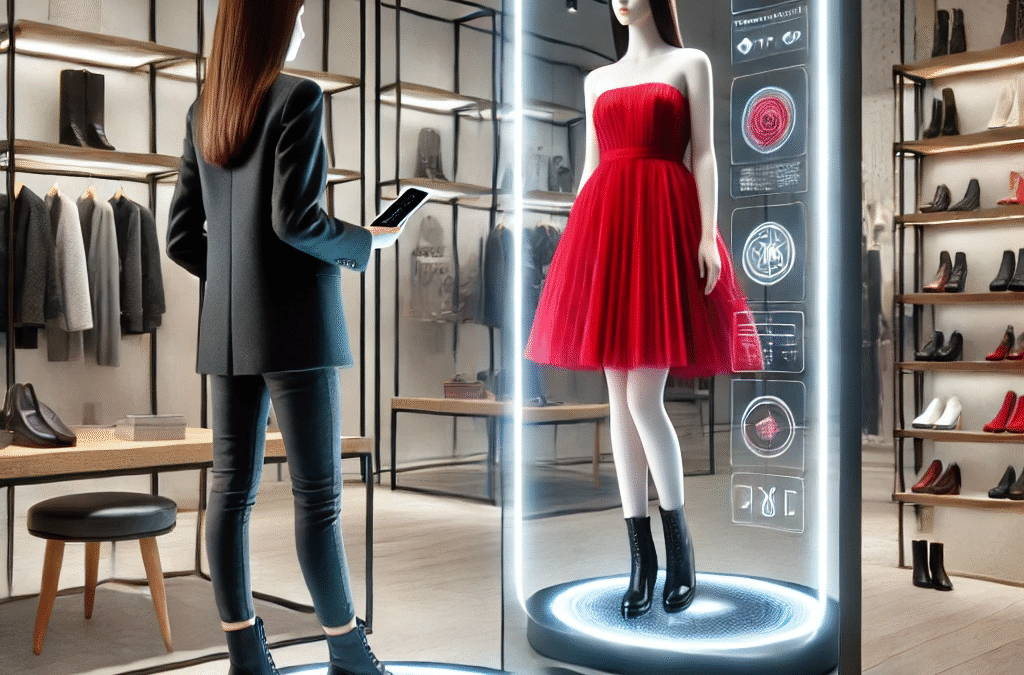
At their core, Virtual Fitting Rooms combine AR, VR, and AI technologies to simulate how clothing and accessories would look and fit on a customer.
Here’s how the experience typically works:
- AR overlays use a smartphone or smart mirror camera to superimpose 3D images of clothing onto the shopper’s body in real time.
- VR environments replicate physical store dressing rooms, allowing users to “walk through” a digital version of a boutique using VR headsets or mobile interfaces.
- AI-powered recommendation engines analyse user data, such as body dimensions, purchase history, and style preferences, to provide personalised fit suggestions.
Together, these technologies not only enhance customer satisfaction but also produce valuable data on user preferences and product engagement — insights that retailers can use to refine their inventory and marketing strategies.
The Business Impact of Virtual Fitting Rooms
For decision-makers in retail, the potential business impact of Virtual Fitting Rooms goes far beyond improved customer experience.
Reduced Returns and Waste
Sizing uncertainty is one of the biggest pain points in online fashion retail. Virtual try-on tools help consumers make more confident purchasing decisions, reducing the number of product returns and contributing to more sustainable retail practices.
Higher Conversion and Retention Rates
When shoppers can see how a product looks and fits in real time, they’re more likely to buy. According to the World Economic Forum, 32% of consumers purchase products after checking it out on VR platforms compared to the global average e-commerce conversion rate which ranges between 2% and 4% across all industries in 2025 according to Network Solutions.
Stronger Customer Loyalty and Engagement
Immersive experiences enhance brand recall. Customers who engage with virtual try-on tools tend to spend more time with the brand, increasing the likelihood of repeat purchases and advocacy.
Enhanced Cross-Border Sales
In markets like Singapore, Thailand, and Indonesia — where consumers often buy from international e-commerce platforms — virtual fitting rooms help reduce uncertainty around fit and style, encouraging more confident cross-border transactions.
Richer Data for Strategic Decisions
AR/VR platforms collect anonymised data on consumer preferences, helping retailers forecast demand, manage inventory, and personalise promotions — a key advantage in an omnichannel retail model.
Challenges and Considerations
Despite its potential, the path to AR/VR adoption comes with practical considerations.
- Implementation Costs: High-quality AR/VR experiences require investment in 3D modelling, software integration, and testing.
- Integration Complexity: Seamless deployment demands interoperability with existing systems such as POS, inventory management, and customer data platforms.
- Data Privacy: Retailers must ensure compliance with data protection regulations, especially when handling visual and biometric data.
- Regional Readiness: While consumers in markets like Singapore are early adopters of immersive tech, infrastructure and bandwidth challenges persist in some parts of Southeast Asia.
Retailers exploring this space should view these not as deterrents but as strategic planning factors. Early movers who plan for integration and scalability stand to gain significant first-mover advantages.
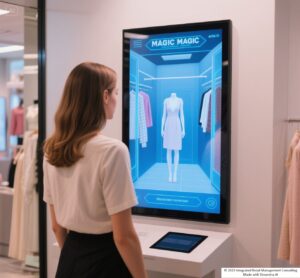
Alt Text: A woman using an AR-enabled magic mirror in a fashion retail store to browse different clothes at a Virtual Fitting Room
Description: A shopper picking out an outfit using an AR Magic Mirror at a Virtual Fitting Room
AR/VR Opportunities in Southeast Asia’s Retail Landscape
Southeast Asia presents fertile ground for immersive retail technologies:
- High Smartphone Penetration: With mobile-first consumers across Indonesia, Thailand, and Singapore, AR applications can easily scale through apps and social media.
- Digital-First Demographics: Gen Z and Millennials — key retail spenders — expect personalised and interactive shopping experiences.
- Government Support: National digitalisation programs, like Thailand’s “Digital Economy Promotion” and Singapore’s “Smart Nation” initiative, encourage tech adoption among retailers.
- E-commerce Boom: Online marketplaces are expanding rapidly, prompting retailers to innovate around product discovery and customer engagement.
Together, these factors create a high-growth environment where retailers can pilot AR/VR experiences without needing to overhaul their entire digital ecosystem.
Looking Ahead: A Step Toward the Future of Retail
Virtual Fitting Rooms are not a standalone innovation — they form part of a larger transformation roadmap that includes AI, cloud migration, and omnichannel retail integration.
Forward-looking retailers are increasingly adopting composable commerce architectures and headless POS systems to build flexibility into their tech stack. Integrating AR/VR solutions within this architecture allows retailers to experiment quickly, scale across markets, and deliver connected customer experiences both online and offline.
For C-suite leaders, now is the time to explore how AR/VR can enhance the customer journey, reduce operational inefficiencies, and differentiate brand positioning in a competitive landscape.
Conclusion
Virtual Fitting Rooms are reshaping the future of fashion and lifestyle retail.
They combine immersive technology with actionable business value — helping retailers reduce returns, increase conversions, and unlock data-driven insights. For Southeast Asia’s rapidly digitising markets, AR and VR represent not just a customer engagement tool but a key driver of retail transformation.
While adoption remains in its early stages, the momentum is accelerating. Retailers who start exploring now will be better positioned to lead in the next phase of experiential retail.
Stay ahead of retail technology trends shaping Southeast Asia.
Subscribe to Integrated Retail’s newsletter to receive expert insights on AR/VR, AI, and digital transformation — straight to your inbox.
FAQ: Virtual Fitting Rooms and AR/VR in Retail
What are Virtual Fitting Rooms?
Virtual fitting rooms use AR and VR technologies to let shoppers try on clothing or accessories virtually using digital overlays or immersive environments.
How do AR and VR enhance the retail experience?
They create interactive, lifelike product experiences that improve engagement, confidence, and conversion rates.
Are Virtual Fitting Rooms expensive to implement?
Costs vary by complexity, but cloud-based and modular AR/VR solutions are making adoption increasingly accessible for retailers of all sizes.
What benefits can retailers expect?
Reduced product returns, higher sales, richer customer data, and better omnichannel engagement.
Is AR/VR adoption growing in Southeast Asia?
Yes. With high digital adoption rates, mobile-first consumers, and government-led innovation programs, Southeast Asia is emerging as a prime market for immersive retail technology.