
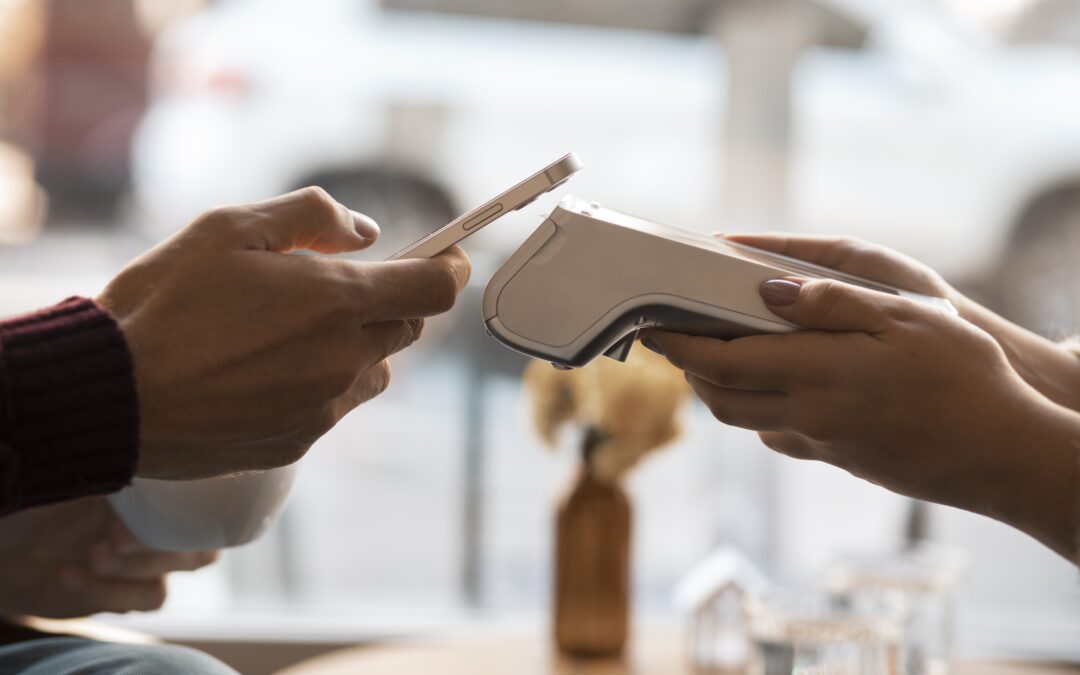
Across Southeast Asia, digital payments are no longer a convenience—they are becoming the dominant consumer expectation. According to the Visa Consumer Payment Attitudes Study, 79% of Southeast Asian consumers use mobile wallets, with e-wallet usage growing faster in Indonesia and Thailand than in any Western market. This shift is not simply behavioural; it represents a deeper structural transformation in how modern retail operates.
For enterprise retailers, the move toward cashless stores is not about eliminating cash drawers—it is about redesigning the store around speed, data, and automation. Moving to a cashless model demands a rethinking of POS systems, payment architecture, store operations, staff workflows, customer education, and fraud prevention. And unlike pure-play e-commerce transformation, cashless retail requires coordination across physical and digital layers simultaneously.
This article examines the strategic, technological, and operational dimensions of cashless store implementation for large fashion, lifestyle, and department store chains in Southeast Asia—where digital adoption is fast, but operational complexity remains challenging.
Understanding Cashless Stores in Today’s Retail Landscape
Cashless stores are retail formats that conduct all transactions digitally—whether via e-wallets, QR codes, contactless payments, or in-app purchases. But the term “cashless” often obscures the complexity behind it. A cashless store is ultimately an operating model, not just a payment preference.
Global Signals, Local Acceleration
Globally, regions like China, South Korea, and the Nordics have demonstrated that when digital payments reach a critical mass, retailers can redesign their operating costs, staff structures, and store layouts. Yet it is in Southeast Asia where we observe an especially dynamic environment driven by:
- Mobile-first consumers
- Ubiquitous QR payment rails (PromptPay, SGQR, DuitNow)
- Rapid e-wallet adoption (GrabPay, GoPay, OVO, ShopeePay)
- Government-backed initiatives pushing digital commerce
Unlike mature Western markets where card networks dominate, SEA consumers leapfrogged straight into wallet ecosystems and super-app payments. This creates a unique opportunity for retailers to adopt cashless formats that are both cost-efficient and customer-centric.
Why Cashless Stores Matter for Large Retailers: A Business Impact Perspective
Cashless retail is not a technology project—it is a business transformation that touches revenue, operations, workforce, and customer experience.
Revenue Growth and Customer Experience
Shifting to cashless formats typically improves transaction speed, conversion, and dwell time. Customers experience:
- Shorter queues
- Smoother checkout flows
- Higher likelihood of impulse or add-on purchases
- A more digital-first, frictionless store journey
Mobile self-checkout and cashierless experiences encourage customers to browse longer without worrying about queue congestion. In high-volume formats—sportswear, beauty, fast fashion—the impact can be meaningful.
Operational Efficiency and Cost Reduction
Cash-handling operations are time-intensive and costly. By moving to cashless, retailers can eliminate:
- End-of-day reconciliation
- Manual count-and-log processes
- Cash-safe operations and armored transport
- Cash shortages and manual error
In some implementations, retailers reduce closing time by 30–45 minutes per store, freeing staff for sales, service, and operational functions that add more value.
Loss Prevention and Inventory Accuracy
Digital transactions leave a clear data trail. Combined with RFID, AI-driven video analytics, and mobile checkout monitoring, enterprise retailers see:
- Lower internal shrink
- Reduced fraud opportunities
- Automated anomaly detection
- Better demand forecasting from integrated payment data
Cross-Border Expansion and Reporting
For multi-market retailers operating in Singapore, Thailand, and Indonesia, cashless formats create standardisation. Digital payments can be unified through a regional orchestration layer, allowing:
- Consistent reporting
- Faster e-wallet onboarding
- Harmonised checkout experiences across countries
- Simplification of treasury operations
In short, cashless stores streamline scale.
→Read more about cross-border expansion here.
The Technology Foundation of Cashless Stores
A cashless store is only viable when the underlying technologies are tightly integrated. For many retailers, the journey begins by modernising the POS system, then extending into payments, automation, and middleware.
Modern Enterprise POS
A cashless-ready POS must support:
- Real-time API connectivity
- QR payment flows
- E-wallet acceptance
- Tap-to-pay
- Mobile POS expansion
- Offline resilience
A legacy POS system often becomes the biggest bottleneck. Many retailers start their transformation by investing in enterprise POS implementation to create a stable foundation for future automation.
Payment Gateway & Orchestration Layer
In multiregional retail, integrating every wallet individually becomes unmanageable. A payment orchestration layer solves this by:
- Routing transactions intelligently
- Tokenizing payment data
- Consolidating cross-border reporting
- Automating fraud checks
- Accelerating onboarding of new payment methods
SEA Digital Wallet & QR Infrastructure
SEA is wallet-led. This requires retailers to integrate deeply with:
- GrabPay, GoPay, OVO
- PromptPay, SGQR, DuitNow QR
- Banking apps with instant pay capabilities
- Local acquiring banks
A successful cashless strategy recognises that payment behaviour is culturally local, not regionally uniform.
RFID and Computer Vision Automation
Automation plays a critical role in cashless environments where friction must be minimised. RFID enables:
- Instant item recognition
- Faster stock management
- Seamless mobile checkout verification
- Better shrink management
Computer vision contributes to:
- Smart fitting rooms
- Automated product recognition
- Suspicious behaviour alerts
- Queue-free exit gates
Mobile Self-Checkout
Mobile checkout is not just a payment feature—it transforms the store journey by turning every customer’s smartphone into:
- A scanner
- A checkout terminal
- A personal shopping assistant
- A loyalty identity device
Integration Middleware
Cashless stores rely on numerous systems talking to each other in real time. A robust integration layer ensures:
- POS ↔ ERP synchronisation
- Payment events ↔ inventory updates
- RFID ↔ WMS
- Loyalty ↔ promotion engines
Security, Fraud Prevention & Compliance
Cashless stores must address new risks:
- QR spoofing
- Wallet fraud
- Refund abuse
- Chargebacks
- Account takeover attempts
AI-driven risk scoring, device fingerprinting, and real-time validation are essential.
Change Management: The Human Core of Cashless Transformation
Technology is the foundation, but people determine the outcome.
Retailers who succeed in cashless transformation invest heavily in operational change management.
Store Operations Redesign
Cashless stores require a rethinking of:
- In-store traffic flow
- Where staff are positioned
- How exceptions are handled
- New checkout stations
- Mobile POS zones
- Signage for digital payments
Stores often discover that small changes—such as repositioning self-checkout stations—significantly improve adoption.
Staff Enablement & Skills Development
The shift from cashier to “customer ambassador” changes the job profile. Training must prepare staff to:
- Guide customers through QR payments
- Support mobile checkout issues
- Handle digital payment exceptions
- Resolve wallet failures diplomatically
- Advocate for the new experience
Staff confidence is one of the most important adoption drivers.
Customer Education
Retailers often underestimate the need for customer education. Effective strategies include:
- Digital screens demonstrating payment flows
- QR-on-standee instructions
- Mobile app prompts
- Staff-led onboarding during first visits
Retailers must treat customer education as part of the experience, not as friction.
Regulatory Considerations
Cashless legality varies:
- Singapore: Flexible, widely cashless-ready
- Thailand: High e-payment acceptance; cash optional
- Indonesia: Strong e-wallet growth but mandates cash acceptance in some sectors
Retailers must design models aligned with local rules.
A Practical Implementation Roadmap
Below is the roadmap most enterprise retailers follow—refined across actual regional deployments.
Phase 1: Strategic Assessment
Retailers assess:
- Digital payment readiness
- Store format suitability
- Wallet penetration by market
- Technology gaps
- Cost reduction potential
This phase includes defining the cashless ambition level—full, partial, or hybrid.
Phase 2: Technical Architecture
Architectural design includes:
- POS modernisation
- Payment orchestration
- Mobile checkout
- RFID rollout
- Integration middleware
- Fraud prevention frameworks
CIOs and CTOs often see this phase as the operational backbone of the entire transformation.
Phase 3: Pilot Store Deployment
A carefully chosen pilot store allows the organisation to test:
- Operational impact
- Staff training programs
- Customer adoption rates
- System stability
- Store layout changes
A successful pilot creates the internal momentum needed for scale.
Phase 4: Multi-Country Rollout
Once validated, retail chains expand across store networks, adapting for:
- Local wallets
- Banking partners
- Regulations
- Customer demographics
Phase 5: Continuous Optimisation
As the store becomes more digital, new optimisations emerge:
- RFID-based inventory accuracy improvements
- AI-driven fraud reduction
- Dynamic promotion personalisation
- Further queue elimination strategies
Cashless is not an endpoint—it is a new operating model.
Risks and Barriers to Address
Cashless retail implementation carries potential complications:
- Customer segments still relying on cash
- Legacy technology limitations
- Integration delays
- Fraud in unattended checkout scenarios
- Staff resistance due to role changes
Successful retailers mitigate these risks through strong program governance, visible leadership sponsorship, and operational discipline.
Conclusion: Cashless Retail as a Strategic Imperative
Cashless stores represent far more than a payment shift—they redefine how retail operates. For leaders, the question is no longer “Should we go cashless?” but “How quickly can we build the foundation for profitable and scalable cashless retail?”
With the right combination of:
- enterprise POS implementation
- retail system integration
- omnichannel inventory management
- retail payment gateway integration
- retail technology consulting
…enterprise retailers can create a future-ready store format that is faster, safer, more efficient, and far more profitable.
Integrated Retail supports every stage of the journey—from strategy to rollout—helping retailers adopt modern, scalable cashless operating models. To learn more about implementing a cashless operating model book a consultation with our experts here.
Frequently Asked Questions (FAQ)
- Is it legal to operate fully cashless stores in Southeast Asia?
Yes, but with nuances. Indonesia requires retailers to offer cash under certain conditions, whereas Singapore and Thailand permit full cashless operations depending on sector. - Can cashless stores work in fashion and lifestyle retail?
Yes. RFID and AI make cashless particularly effective in apparel and lifestyle categories, enabling rapid item recognition and seamless checkout. - What are the main cost savings?
Reduced labour associated with cash handling, lower reconciliation time, and elimination of armored transport services. - How long is a typical implementation timeline?
Large retailers often complete implementation in 4–12 months, depending on store count and backend system complexity. - Do customers accept cashless transitions easily?
When properly educated and incentivised, yes. QR payments and e-wallets are already the dominant behaviour in SEA urban markets.