
Introduction
In the fast-evolving retail landscape of Southeast Asia, senior executives face mounting pressure to drive revenue growth, enhance profitability, and streamline operational efficiency. The global retail and consumer goods digital twin market was valued at USD 2013.1 million in 2025 and is projected to grow at a CAGR of 32.7% through 2033. This rapid growth highlights the increasing adoption of digital twin solutions to optimize store operations and enhance customer experience. By creating a virtual replica of physical stores, retailers can simulate, analyze, and optimize every aspect of the shopping experience before implementing changes on the floor.
Digital twins allow executives to make informed, data-driven decisions about product placement, traffic flow, and store layouts, reducing operational risks and maximizing ROI. From Bangkok to Jakarta, leading retailers are leveraging this technology to gain a competitive edge, replicate successful layouts across multiple locations, and adapt to consumer behavior trends in real time. The result is more efficient stores, higher conversion rates, and improved customer satisfaction. This article explores how digital twin technology is reshaping store layout optimization, the business benefits for senior executives, real-world applications in Southeast Asia, and best practices for successful adoption.
What is a Digital Twin for Retail Stores
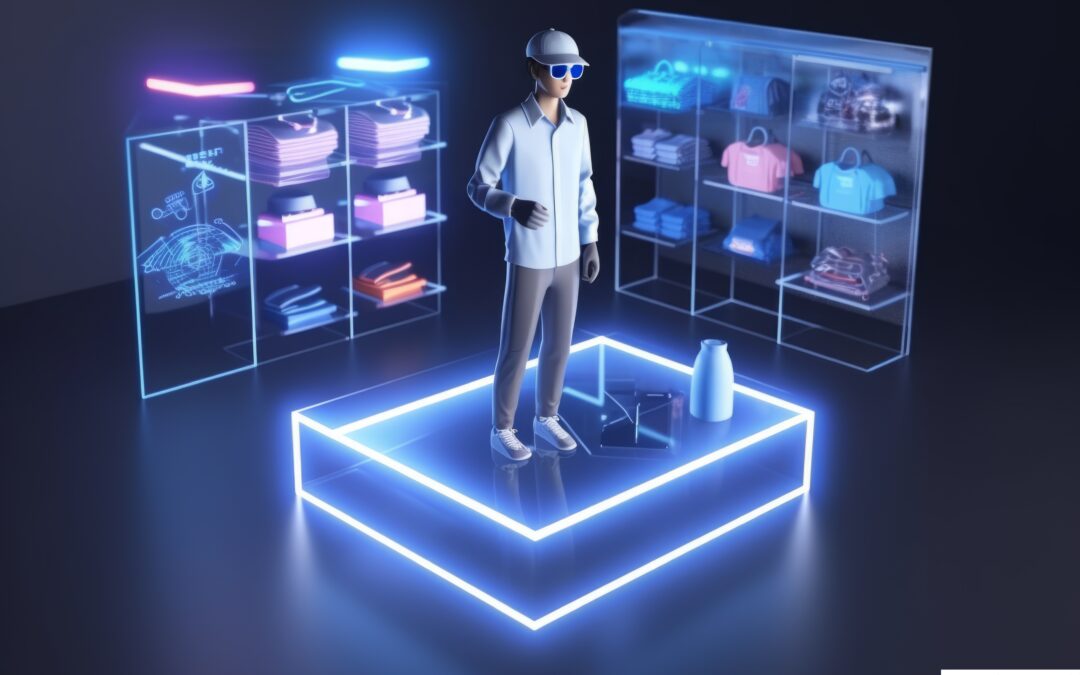
A digital twin is a precise virtual replica of a physical asset—in this case, a retail store. It combines architectural layouts, product placements, lighting, HVAC systems, and real-time operational data to create an interactive, 3D simulation of the store environment.
In retail, digital twins allow executives and store managers to observe how customers navigate aisles, where they linger, and which displays drive conversions. Retailers can integrate point-of-sale (POS) systems, IoT sensors, and AI analytics into the digital twin to monitor foot traffic, inventory levels, and sales performance in real time. This integration enables predictive modeling, scenario testing, and operational simulations without disrupting day-to-day store operations.
→ Learn more about the solution Footfall Cam which can help monitor your store’s food traffic here.
For example, a department store in Singapore can create a digital twin of its flagship store to test new layouts for seasonal promotions. AI algorithms simulate shopper behavior under various scenarios—different product placements, promotional signage, or checkout queue configurations. Retailers can identify bottlenecks, optimize shelf space, and predict sales impact before committing resources.
By translating complex store dynamics into actionable insights, digital twins empower executives to make strategic decisions that enhance the customer experience and drive measurable business outcomes.
How Digital Twins Optimize Store Layout
The process of optimizing a store layout using a digital twin involves several key steps:
- Mapping the Physical Store: Retailers begin by scanning the store using 3D sensors, LiDAR, or CAD drawings to create an accurate digital replica.
- Simulating Layout Scenarios: AI-powered simulations test different configurations for product placement, aisle width, and fixture positioning to observe potential impacts on traffic flow and sales.
- Analyzing Data: Advanced analytics track shopper behavior, dwell time, and conversion rates within the simulation. Machine learning algorithms highlight high-performing zones and underutilized areas.
- Implementing Changes: Optimized layouts are rolled out in the physical store, with ongoing monitoring through integrated POS and store analytics platforms.
Benefits for Retail Executives:
- Increased Foot Traffic: Optimized layouts guide customers through high-value areas and enhance cross-selling opportunities.
- Improved Product Placement: Digital twins identify ideal shelf locations for maximizing sales.
- Operational Efficiency: Stores can reduce congestion, minimize wasted space, and optimize staffing levels.
- AI Integration: Predictive models forecast sales impact of layout changes, enabling proactive decision-making.
Digital twins enable executives to experiment virtually, mitigating risks associated with costly physical store changes and ensuring that investments directly contribute to measurable business outcomes.
Business Benefits of Digital Twins
Revenue Growth
Digital twins allow retailers to optimize product placement and promotional strategies based on predictive shopper behavior analysis. By simulating layout scenarios and measuring potential sales outcomes, executives can implement decisions that drive higher conversion rates and increased revenue.
Increased Profitability
Operational efficiencies achieved through layout optimization reduce costs associated with congestion, underutilized space, and staff allocation. For instance, predictive staffing guided by digital twin insights ensures employees are deployed efficiently, reducing labor costs while maintaining customer satisfaction.
Cross-Border Expansion
Retailers expanding across Southeast Asia can replicate optimized store layouts from one market to another. A successful layout in Singapore can be adapted to similar demographic locations in Thailand or Indonesia, ensuring consistency in brand experience and operational efficiency.
Risk Reduction
Virtual simulations mitigate the risks of costly physical redesigns. Executives can test multiple layout scenarios, promotional strategies, and traffic flows without interrupting store operations, ensuring that decisions are backed by data rather than intuition.
Strategic Decision-Making
Integrated dashboards that combine POS data, AI analytics, and IoT sensors empower executives with actionable insights. Leaders can prioritize investments in store redesigns, promotional campaigns, or expansion initiatives based on quantifiable outcomes.
By leveraging digital twin technology, executives not only improve in-store performance but also create a scalable model for long-term operational excellence and sustained competitive advantage.
Real‑World Retail Digital Twin Case Studies
Leading global retailers are already harnessing digital twin technology to improve store performance, customer experience, and operational efficiency — providing valuable blueprints for large retail chains in Southeast Asia.
Walmart (USA)
One of the earliest adopters of digital twin technology, Walmart uses virtual models of its stores to monitor inventory, simulate customer traffic, and optimize store layouts before changes are made on the floor. This has helped the retailer reduce out‑of‑stock incidents by ~20% and increase in‑store sales by ~10%, demonstrating measurable improvements in customer experience and sales outcomes.
Lowe’s (USA)
Home improvement giant Lowe’s has developed advanced digital twins of its stores that integrate spatial data, product locations, and operations. The digital replicas update multiple times per day, allowing teams to simulate layout configurations and assist staff using augmented reality tools to visualize ideal product arrangements and merchandising strategies virtually.
These real‑world examples show that digital twins can go beyond theoretical value — they deliver tangible improvements in inventory management, customer flow optimization, and operational decision‑making. For Southeast Asian retailers, similar implementations can enhance consistency across store networks, reduce inefficiencies, and support data‑driven retail transformation strategies.
Implementation Guidelines & Best Practices
Adopting digital twin technology requires strategic planning and careful integration:
- Define Objectives: Identify KPIs such as revenue growth, foot traffic, or operational efficiency.
- Integrate Systems: Ensure compatibility with POS systems, ERP platforms, and AI analytics tools.
- Data Collection: Implement IoT sensors, traffic counters, and POS integrations to feed real-time data into the digital twin.
- Simulation & Testing: Use AI and machine learning to simulate layout scenarios and analyze outcomes.
- Phased Implementation: Roll out changes incrementally, monitor results, and iterate.
- Training & Change Management: Equip staff and managers to interpret insights and adopt new workflows.
Key Considerations:
- Ensure scalability across multiple stores and regions.
- Maintain data security and compliance with local regulations.
- Collaborate with retail technology solutions providers for seamless integration and ongoing support.
Integrating Your Digital Twin with Your POS System
For digital twin technology to deliver real, actionable results, integration with your POS system is essential. Without linking sales, inventory, and transaction data, digital twin simulations remain theoretical and may fail to reflect actual store performance.
Key Benefits of POS Integration
- Accurate, Data-Driven Decisions: POS data reveals high-performing products and zones, allowing digital twins to simulate layouts that truly drive conversions.
- Dynamic Inventory Management: Real-time sales tracking ensures simulations account for current stock levels, enabling more precise product placement and promotion planning.
- Optimized Staff and Checkout Flow: POS data informs digital twin models about peak times and transaction volume, helping optimize staffing and customer flow.
- Predictive Scenario Planning: Executives can test promotions or seasonal campaigns in the digital twin and forecast revenue and operational impact before implementation.
For example, a fashion retailer in Singapore can adjust floor layouts dynamically based on real-time POS trends, while a supermarket chain in Jakarta can simulate checkout lane configurations during peak hours to optimize customer throughput.
Integrating POS data transforms a digital twin from a static model into a powerful, revenue-focused decision-making tool that directly ties store layout changes to measurable business outcomes.
Integrated Retail helps retailers across Southeast Asia upgrade and integrate their POS systems with digital twin technology, enabling real-time insights, predictive simulations, and data-driven store optimization. By connecting your POS with digital twins, your retail operations become more efficient, scalable, and revenue-focused. Executive leaders can confidently implement layout changes, optimize product placement, and replicate successful store formats across multiple locations — all supported by Integrated Retail’s expert solutions and implementation services.
FAQ Section
- What is the ROI of implementing digital twin technology in retail?
ROI varies based on store size and scope, but case studies indicate revenue increases of 10–15% and operational cost reductions of 5–10% within the first year.
- How complex is it to integrate a digital twin with existing POS and ERP systems?
Modern digital twin solutions are designed for compatibility with enterprise POS and ERP systems, with integration supported by experienced retail technology solutions providers.
- Can digital twins be scaled across multiple stores?
Yes. Once an optimized store layout is validated, it can be replicated across other locations to ensure consistent brand experience and operational efficiency.
- How long does implementation take?
Implementation timelines vary but typically range from 3–6 months for mid-sized stores, depending on data availability and system integration complexity.
- Is staff training required?
Yes. Training ensures that store managers and operational teams can interpret digital twin insights and implement layout changes effectively.
- Are there privacy or data security concerns?
Digital twin platforms comply with local regulations and best practices in data security. Retailers must ensure proper governance for customer and operational data.